President Obama Declares the United States in Full Control of a Strait That Remains, in Unrelated News, Closed
Tehran threatens to prolong the war it describes itself as winning; Washington asserts command of the waterway no tanker is using; the tankers await further symmetry
Ink = the flip (fiction). Red = real Republican · Blue = real Democrat.
WASHINGTON — President Obama told the nation this week that the United States is in control of the world's most important oil chokepoint. Tehran responded that it is prepared to prolong the war for as long as necessary. The strait, controlled by one side and prolonged by the other, remains what it has been for weeks: closed.
The Press's cartography desk confirms that both statements can be technically defended and that neither moves a tanker.
Reaction at home followed the standing choreography. Voters who once described confident wartime pronouncements as reckless bravado now hear steady command; voters who once heard steady command now detect a quagmire being renamed. The vocabulary itself — 'projecting strength,' 'no end in sight,' 'what's the exit strategy' — passed from one party's pundits to the other's overnight, in clean condition, barely used.
The Press reminds readers that its beat is not the war, on which it takes no position, but the flip: every phrase currently deployed to defend the president's confidence was previously deployed to mock a predecessor's, and the reverse, with the serial numbers intact.
Veterans of past administrations of both parties appeared on television to say the situation was unprecedented, before comparing it, at length, to precedents they personally set.
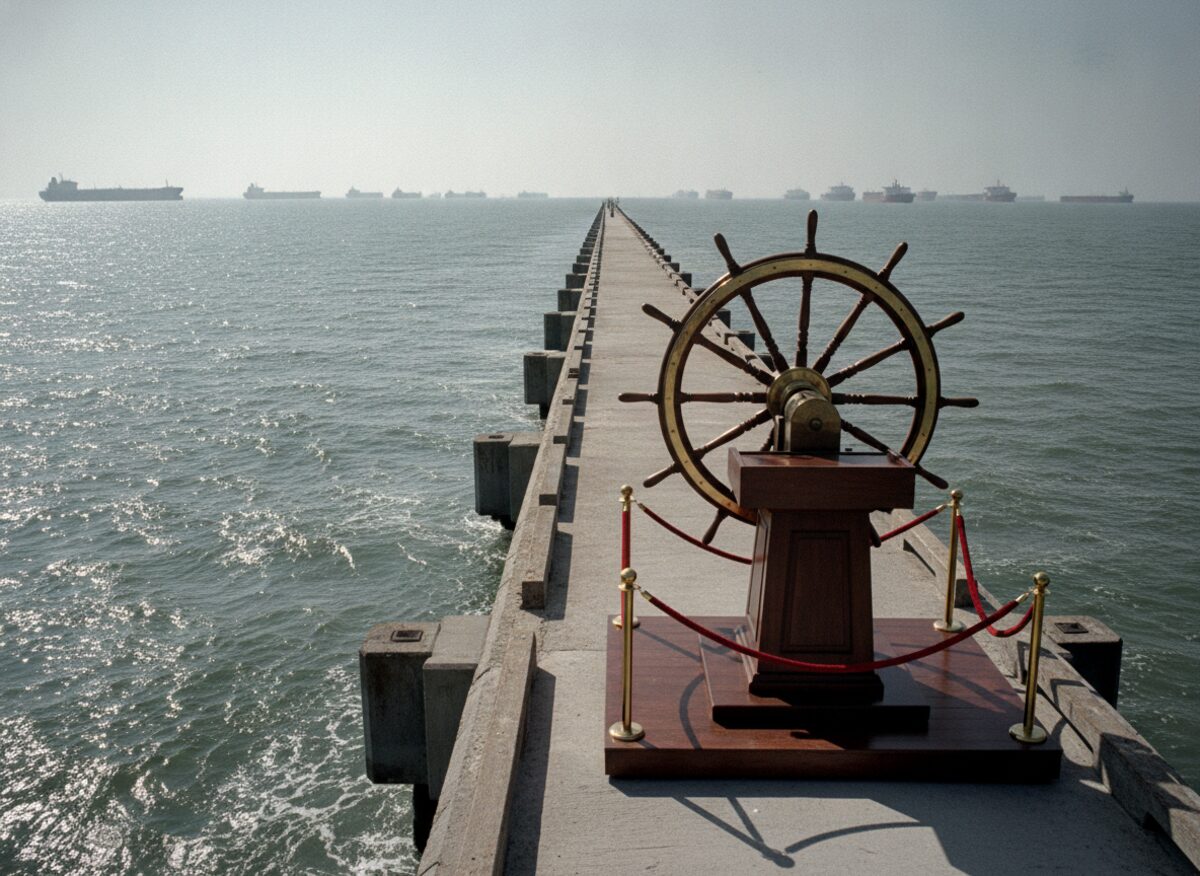
Control of the strait could not be independently verified from the pier. The queue at both ends, however, is verifiable, growing, and — The Press notes — bipartisan.
📜 The Receipts
What actually happened: President Trump insisted the U.S. controls the Strait of Hormuz as Iran said it could 'prolong' the war with the United States, with the critical waterway still closed to tanker traffic.