President Obama Announces He Will Discuss Peace With Iran as Soon as Iran Pays America for the Inconvenience
Talks to reopen the strait stall as each side demands the other cover the check; the table, sources say, remains set
Ink = the flip (fiction). Red = real Republican · Blue = real Democrat.
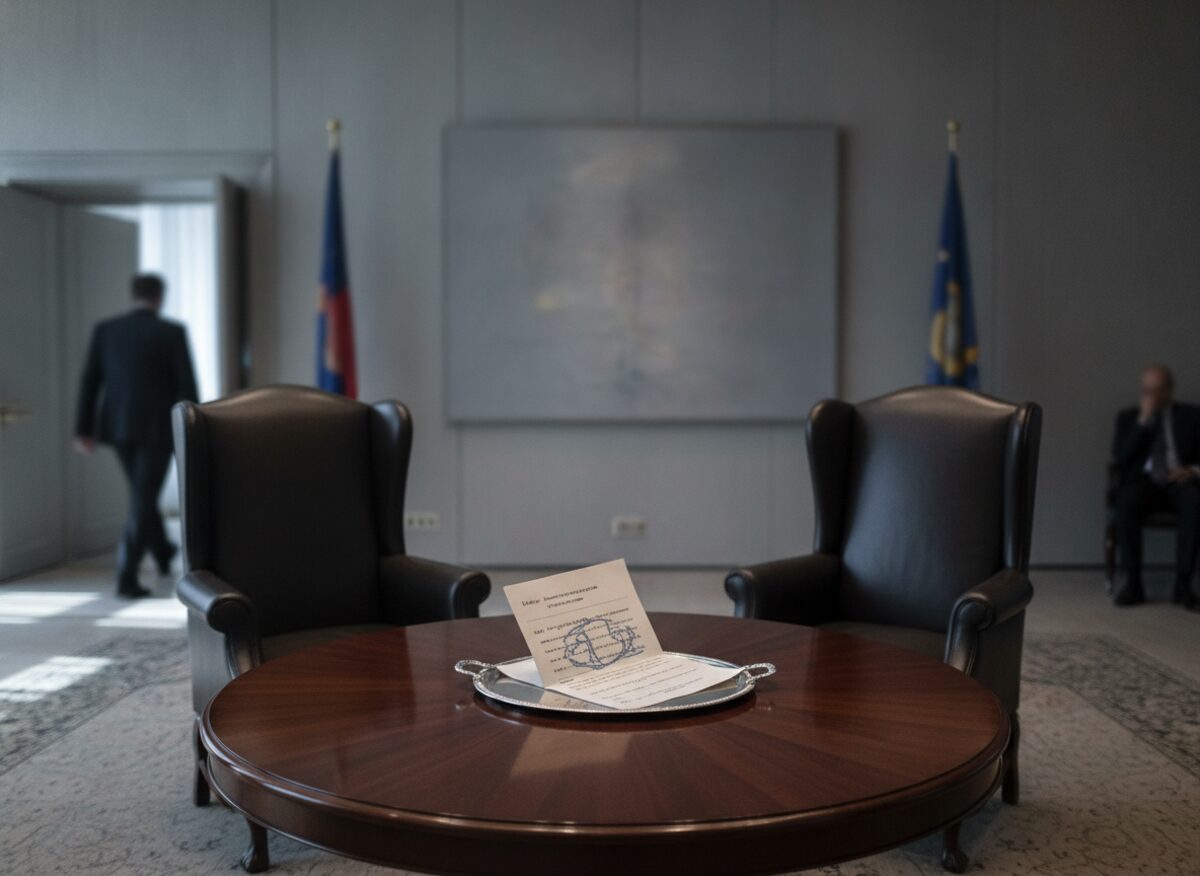
WASHINGTON — President Obama introduced a new precondition for winding down the standoff with Tehran this week: before the United States will discuss terms, Iran must agree to pay compensation for its past conduct. Tehran had opened the weekend by demanding the reverse. Diplomacy, The Press observes, has reached the stage of the dinner where both parties are theatrically reaching for a check neither intends to touch.
Reaction split instantly along the only line that matters. Voters who once described invoice-first diplomacy as reckless brinksmanship now describe it as long-overdue strength; voters who once described it as strength now hear echoes of appeasement's opposite, whatever that is. The phrases changed hands at market rate, in an orderly transaction.
The Press takes no position on the negotiation itself. Our beat is narrower: we note only that 'you cannot reward that regime' and 'you have to talk to your adversaries' are both currently in use, by both camps, aimed in whichever direction the byline requires.
Foreign policy veterans of both parties agreed the demand was unprecedented, then privately supplied precedents from their own administrations, on background, with evident pride.
The strait remains closed. The invoice remains open. The flip button remains, as ever, directly below this paragraph.
📜 The Receipts
What actually happened: President Trump said he would require compensation from Iran as a condition for talks, after Tehran said U.S. compensation would be required to reopen the Strait of Hormuz.