President Obama Vows Supreme Court Fight for His Right to Build an Enormous Ballroom
Appeals court rules Congress must approve the construction; supporters call ruling judicial overreach, will reverse position upon next administration
Ink = the flip (fiction). Red = real Republican · Blue = real Democrat.
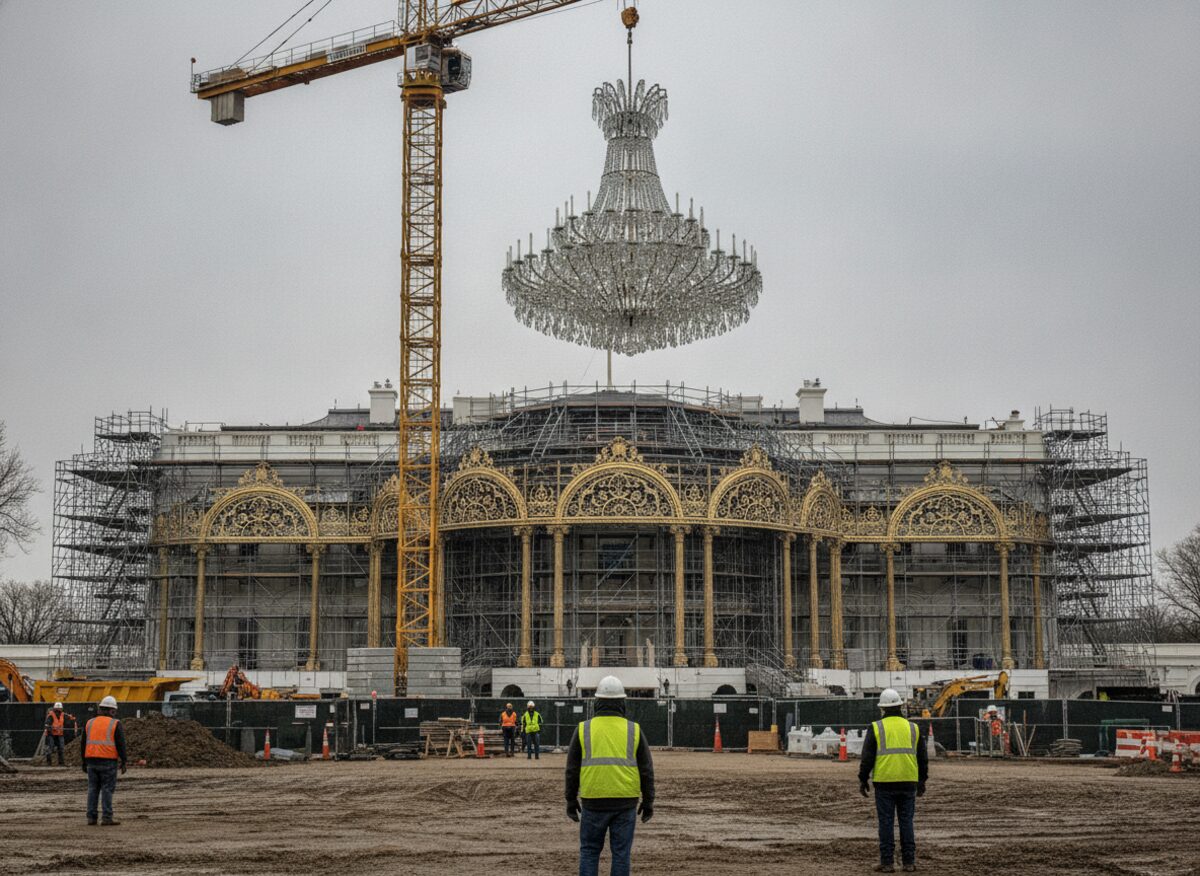
WASHINGTON — President Obama announced this week that he will take his ballroom to the Supreme Court, after a federal appeals panel ruled that attaching a very large ballroom to the White House is the sort of thing Congress is supposed to sign off on first.
The court described the construction as a matter for the legislature rather than, in so many words, executive self-help — a legal term of art meaning "you cannot simply build the ballroom."
Reaction fell along predictable lines, which is to say, along whichever lines the reader walked in with. Supporters of the President praised the project as a long-overdue investment in American hospitality infrastructure. Opponents called it a monument to vanity erected while ordinary families struggle. Both groups confirmed they would be exchanging scripts at the next inauguration, as is tradition.
"The framers were silent on ballrooms," noted one constitutional scholar, "mostly because they assumed no one would try this."
At press time, the concrete frame and four towering walls stood in dignified silence, awaiting either a Supreme Court ruling or a change in which party finds them beautiful.
📜 The Receipts
What actually happened: A federal appeals court blocked construction of the White House ballroom, ruling the decision belongs to Congress; the President has vowed to appeal to the Supreme Court.