Voters Report Mild Confusion After President Newsom's Party Redraws Their Districts Mid-Decade and Schedules a Do-Over Primary
May's votes will not count in four districts, which officials stress is democracy working exactly as redesigned
Ink = the flip (fiction). Red = real Republican · Blue = real Democrat.
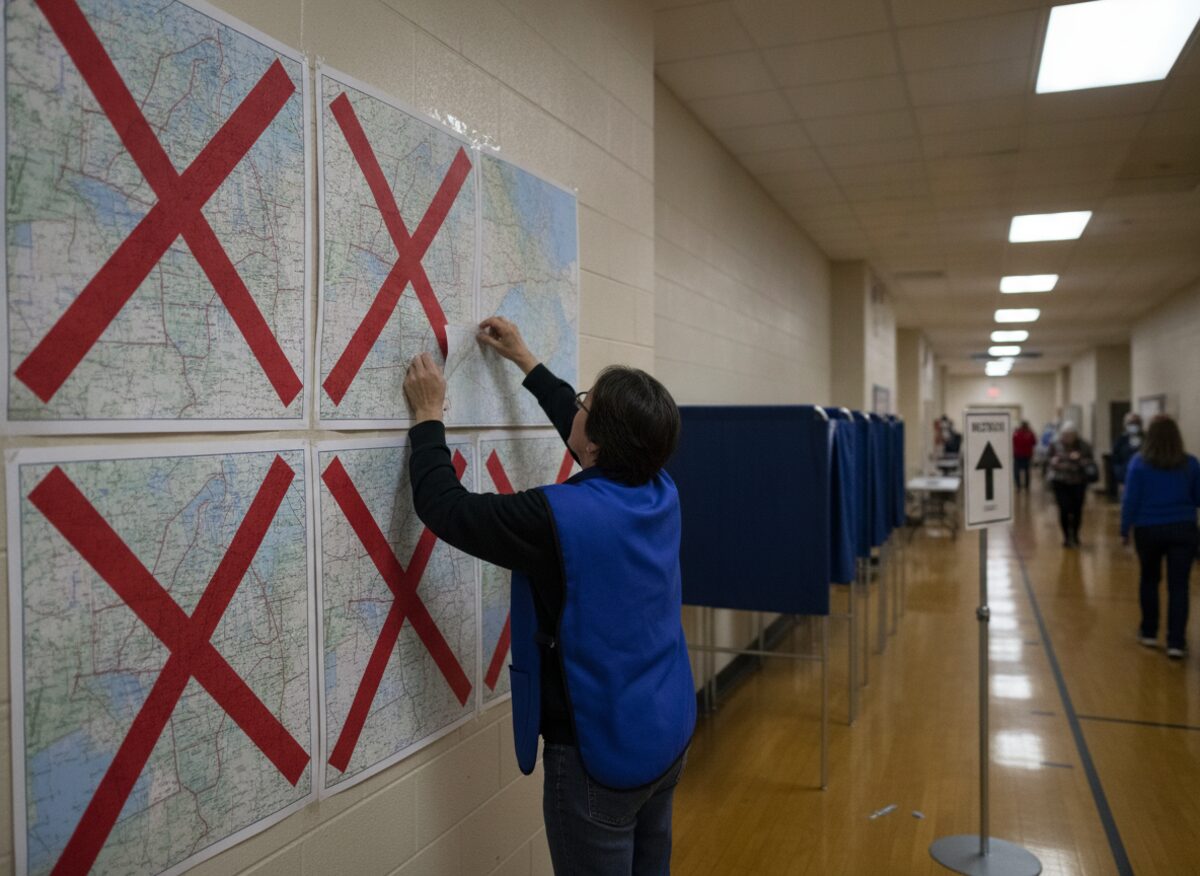
MONTGOMERY — Voters in four congressional districts returned to the polls Tuesday for a second primary, their May ballots having been retroactively converted to practice. The do-over follows a mid-decade redistricting championed by President Newsom's party to maximize its odds of holding the House, a project supporters call map hygiene and opponents call theft with a compass.
The Press reminds readers of its standing cartographic rule, published in yesterday's edition and true in both directions: a gerrymander is a district drawn by the other party. Districts drawn by one's own party are communities of interest.
One district that previously featured a single candidate now features six, all drawn toward the seat by the promise of friendlier lines — a migration pattern ornithologists describe as 'follow the food.'
Local officials worked to reassure residents that their May votes had mattered in spirit. Voters who asked which district they now live in were encouraged to check a website, which was described as up-to-date by the same officials who described the previous map as permanent.
Turnout was projected to be low, which each party privately considers the other party's fault and its own strategy.
The Press has flipped the president's name above so readers in states redrawn by the other party may enjoy the identical outrage at no additional cost.
📜 The Receipts
What actually happened: Alabama held a second primary on Aug. 11 in four congressional districts after mid-decade redistricting — part of a national Republican effort championed by President Trump — meant votes from the May primary would not count.
WSIU / NPR · Politics & Elections — read the real coverage ↗