Leader Schumer Schedules September Votes Designed Exclusively to Be Voted Against
The chamber departs for five weeks of rest before the strenuous autumn work of not passing things on purpose
Ink = the flip (fiction). Red = real Republican · Blue = real Democrat.
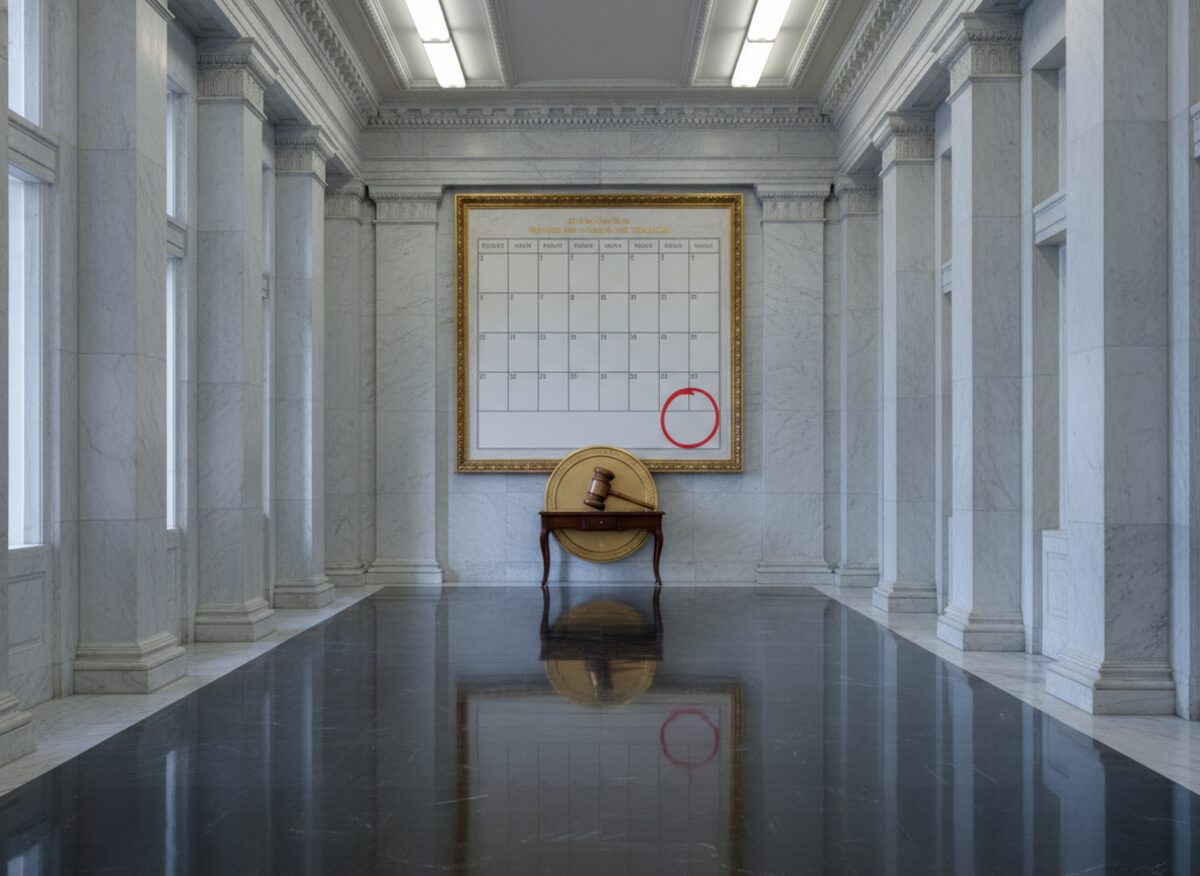
WASHINGTON — As the Senate fled the capital for its five-week summer recess, leader Schumer unveiled the September agenda: a slate of votes on cryptocurrency regulation and college sports whose principal legislative purpose, aides concede in the passive voice, is to force the other party to vote no in front of cameras shortly before an election.
Members of the leader's own conference privately acknowledge the bills have virtually no chance of passage before November. This is not considered a flaw. In the modern chamber, a bill that passes helps the country, but a bill that fails helps the campaign, and only one of those has a deadline.
The Press's civics desk offers its standing translation: a 'messaging vote' is a vote about the vote. The party scheduling it calls it accountability; the party enduring it calls it a stunt; and the two parties exchange these positions with each change of majority, in a ceremony older than most of the participants.
Vulnerable senators of the leader's own party, asked about the plan, expressed enthusiasm at a volume audible only to close listeners, noting that every forced vote pointed at the other side also produces a roll call with their own name on it.
The five-week recess itself drew bipartisan criticism from whichever voters' party is currently out of power, matching bipartisan silence from the other, per tradition.
The republic's business is scheduled to resume in September, pending the result of the argument about whose fault it is that it didn't.
📜 The Receipts
What actually happened: As the Senate departed for its five-week August recess, Majority Leader John Thune laid out September plans for votes on cryptocurrency regulation and college sports, with the chamber's biggest fights punted past the recess toward the election.