Luna Wins House Primary by Running Against a Billionaire's Data Centers and Their 2,500 Tons of Smog
The AI complex next to the district opened without a permit; the district, it turns out, was keeping count
Ink = the flip (fiction). Red = real Republican · Blue = real Democrat.
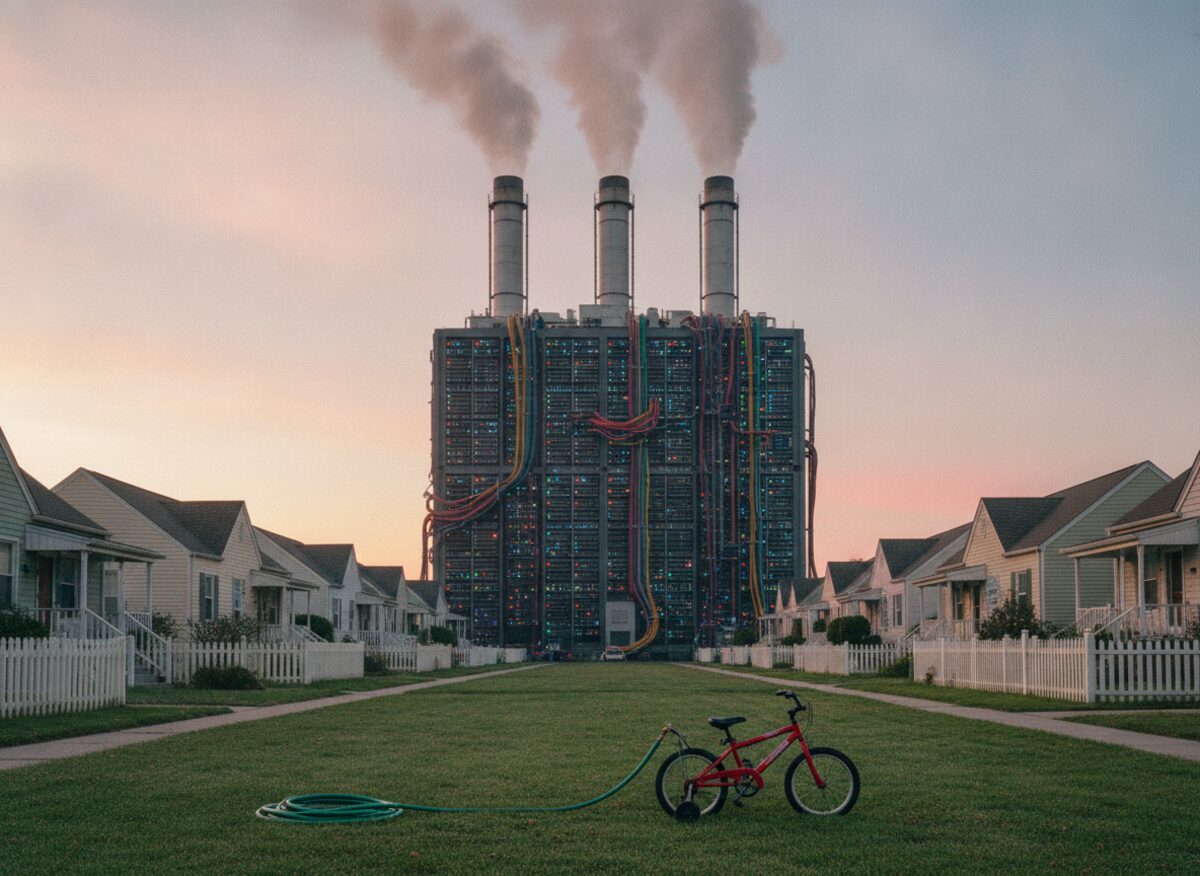
ST. PETERSBURG — Luna cruised to victory in a congressional primary this month on a platform whose central plank was visible from the voters' porches: opposition to a billionaire's artificial-intelligence data centers, whose turbines stand accused of pumping more than 2,500 tons of smog-forming pollution a year into neighborhoods that already lead the state in asthma emergencies.
One of the facilities, litigation notes, began operating without an air permit — a startup velocity investors describe as moving fast and residents describe, between inhaler doses, as breaking things.
The campaign linked the artificial-intelligence boom to asthma, smog and rising power bills, and the linkage proved sturdier at the ballot box than the data centers' own paperwork.
The Press notes what its readers have come to expect: the response to this story is sorted not by lung but by logo. When the billionaire building next door funds the other party, the towers are a toxic land grab by an unaccountable oligarch. When he funds yours, they are jobs, innovation and the future arriving ahead of schedule. The turbines emit identically in both tellings; only the adjectives are filtered.
National commentators debated whether the win signals a broader revolt against the machines' appetite for electricity and air, or merely one district's. The district declined to theorize, having voted.
The data centers, reached for comment, responded in the only language they speak natively: a low, continuous hum, audible from the bicycle.
📜 The Receipts
What actually happened: Justin J. Pearson won the Memphis Democratic House primary after campaigning against Elon Musk's xAI Colossus data centers — whose turbines could emit over 2,500 tons of smog-forming pollution a year, with one facility opening without a permit — near neighborhoods with Tennessee's highest asthma ER visit rates, linking the AI boom to asthma, smog and higher power bills.