Gov. DeWine Sent the National Guard to the Capital, Then Discovered the Troops Were Being Used for a Crackdown He Now Opposes
The governor who volunteered his soldiers for a patriotic celebration threatens to pull them from a mission he says he never signed up for
Ink = the flip (fiction). Red = real Republican · Blue = real Democrat.
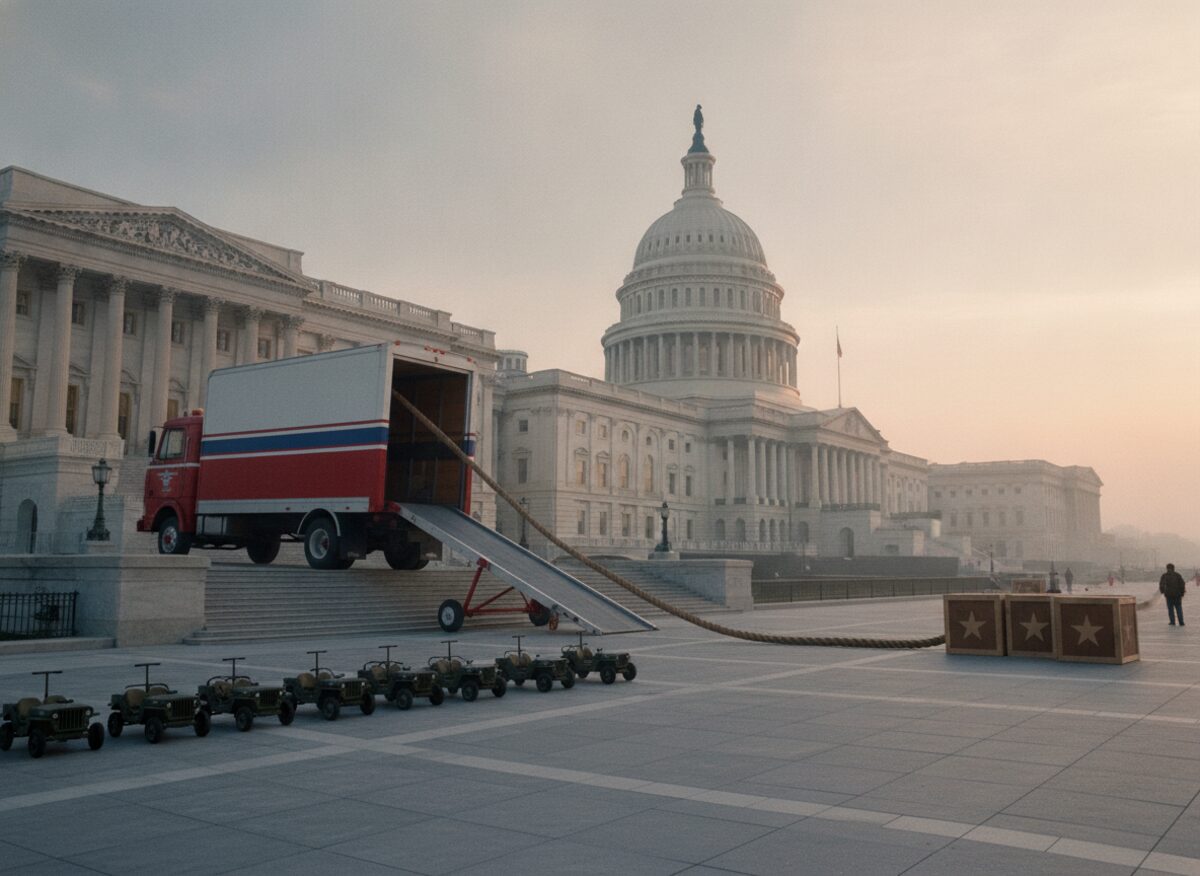
LANSING — Gov. DeWine is facing a backlash after his National Guard troops, dispatched to Washington to help mark a national celebration, were folded into the President's broader crackdown on crime in the capital, an arrangement the governor now describes as a bridge too far and threatens to end early.
The governor, who sent the soldiers voluntarily and stood proudly beside the deployment when it was framed as patriotic duty, discovered a firm objection to troops-in-cities at roughly the moment the troops-in-cities became someone else's initiative. He has vowed to withdraw his Guard if they are used 'beyond the celebration,' a line drawn precisely where the credit stops and the blame begins.
Supporters praised the governor for defending his soldiers from political misuse. Critics accused him of wanting the parade without the policy. The Press notes that 'militarizing our cities' and 'supporting our brave troops' are, in the current dialect, the same deployment described by whether one's own governor gets to cut the ribbon.
Military-affairs analysts observed that National Guard troops, once federalized or assigned, tend to follow orders rather than press releases, a detail that complicates the governor's plan to have deployed them for the good part only.
Asked whether he regretted sending the troops, the governor said he was proud of the men and women in uniform and would continue to be proud of them right up until the poll numbers advised otherwise.
📜 The Receipts
What actually happened: Democratic governors who sent National Guard troops to Washington, D.C., for the nation's 250th-anniversary events faced backlash as their forces were drawn into the administration's ongoing crime crackdown in the capital; Michigan Gov. Gretchen Whitmer, whose roughly 160 troops were slated to stay through Aug. 31, threatened to end the deployment early if the Guard were used beyond the anniversary.